15.2% more reported power.
The comparison reports 51.4 kW for HET-IR98 versus 44.6 kW for M90C60 at the 100% throttle point. More output in a lower-mass package is the starting point for a stronger propulsion design.

High-torque motor systems for wind, nuclear, pumps, actuators, and defense — built in Fort Worth, Texas.
Explore Our PlatformMore mission. Less motor. Explore our Group 1–3 UAS application focus.
Technology Partners
 Richardson Electronics

The Challenge
Legacy motors are oversized for their output. Gearboxes add weight, cost, and additional failure points to every installation.
No graceful degradation — when one phase is lost, the entire motor shuts down. Every failure becomes a full-system event.
45% of global electricity powers motors,1 yet century-old topologies have plateaued. Incremental gains can't close the gap.
Linear Labs built a new motor class from the ground up to solve all three.
1IEA 4E & ABB, 2023. Electric motor systems account for over 45% of global electricity consumption.
Our Technology
A patented circumferential flux architecture purpose-designed for the highest torque density in any motor class — delivering breakthrough efficiency and fault tolerance in a compact package.
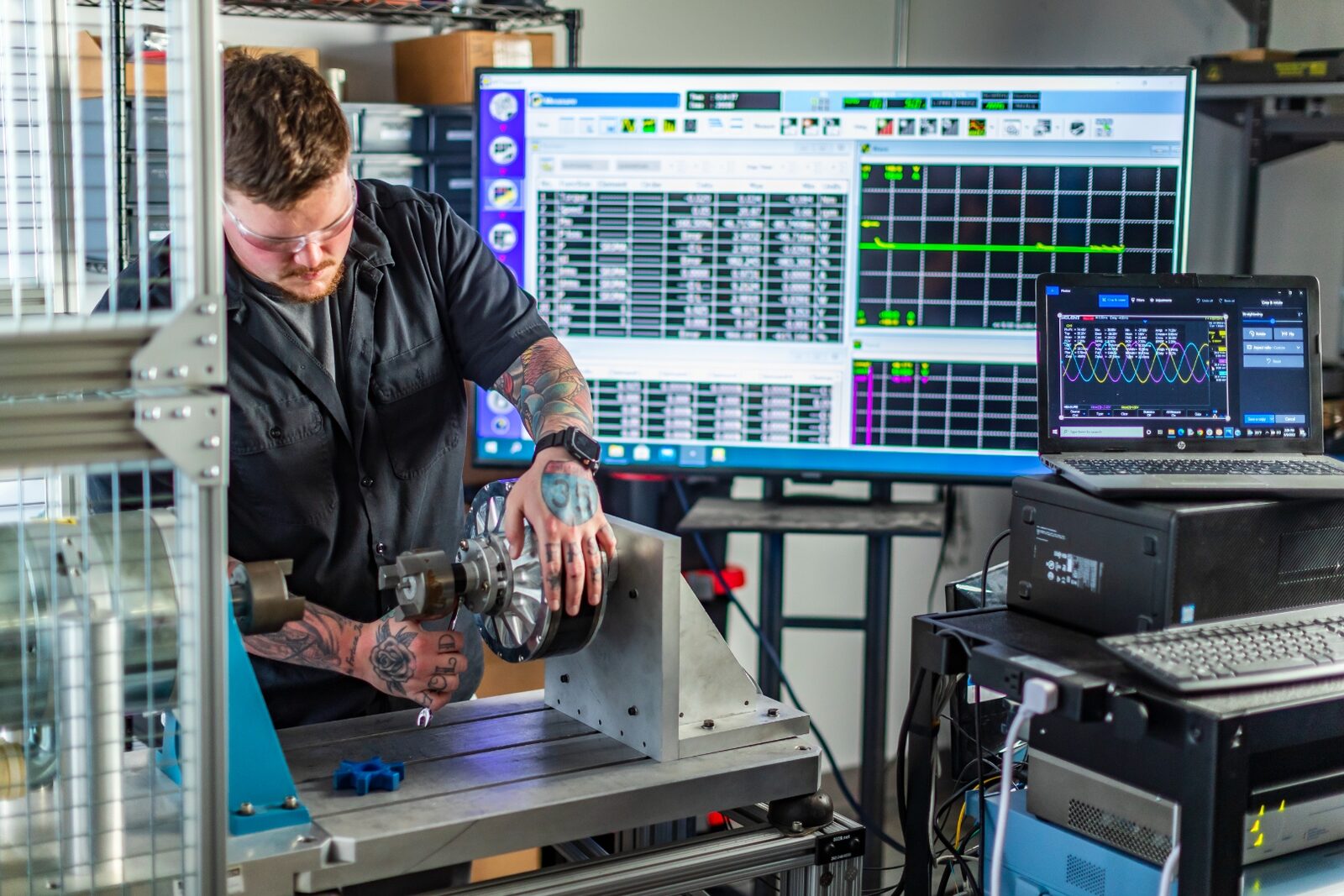
Purpose-designed from the ground up for maximum torque density — the first fundamental advancement in motor architecture in over 100 years.
How It Works
The HET (Hunstable Electric Turbine) is a patented 4-rotor permanent magnet architecture purpose-designed for the highest torque output in its class. It combines axial and radial flux paths into a single circumferential flux tunnel — extracting more torque per kilogram than any conventional motor topology.
Unlike legacy radial-flux machines limited by a single flux path, the HET's multi-axis approach creates the equivalent of three motors working in concert — maximizing flux linkage while minimizing copper losses.
*2× torque density, 50% weight reduction, and 97% peak efficiency based on Linear Labs internal testing of HET prototypes vs. equivalent-rated radial-flux motors, air-cooled at rated operating point.
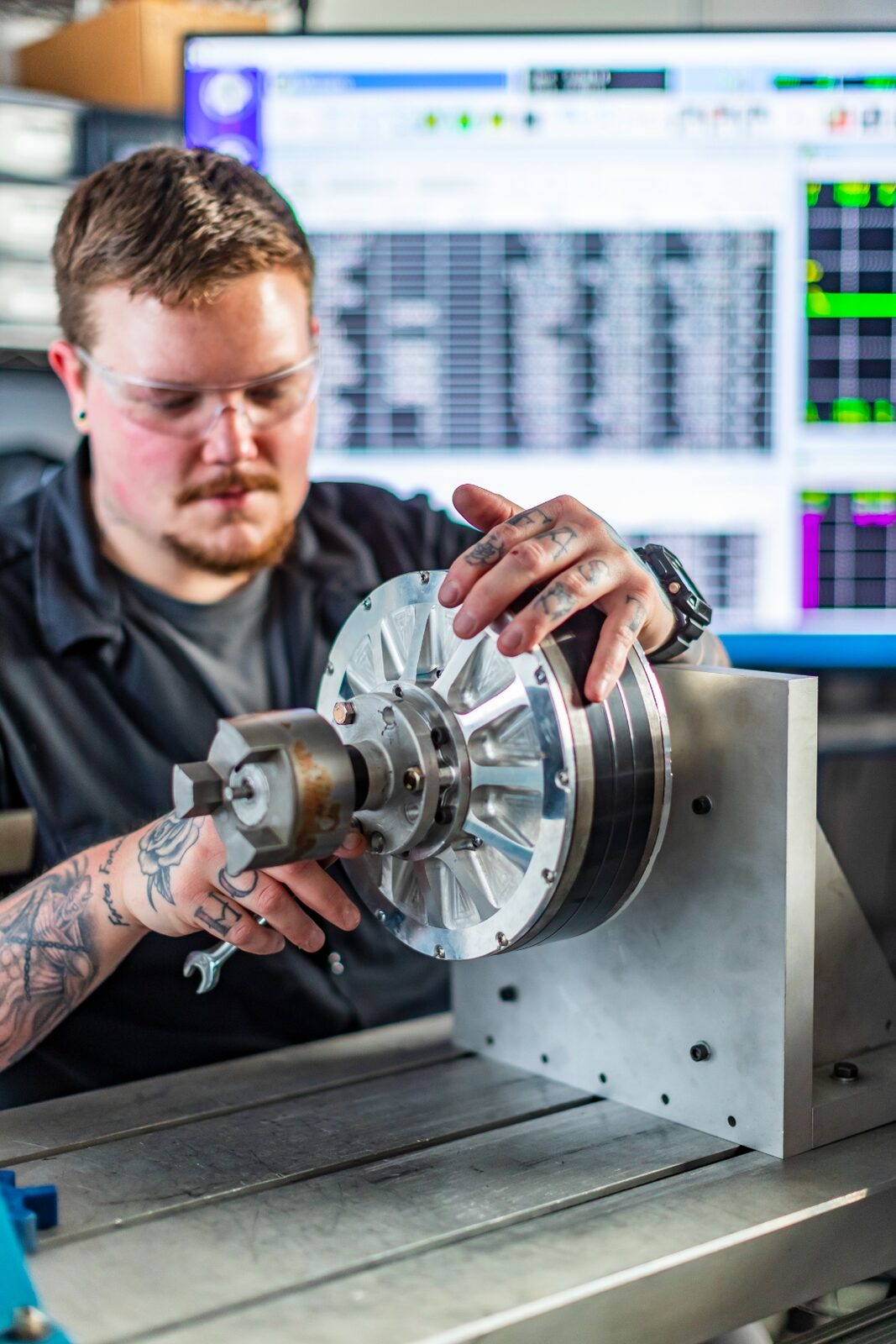
Performance Data
Validated performance comparisons across three power classes.1 All figures are air-cooled.
| Class | Motor | Power | Volume (L) | Mass (kg) | Torque Density (Nm/L) | Specific Torque (Nm/kg) | Size & Weight Reduction |
|---|---|---|---|---|---|---|---|
| Small — Industrial Pumping | |||||||
| HET-IR | 19.8 kW | 8.5 | 26.5 | 4.91 | 1.58 | — | |
| ABB | 18.6 kW | 23.7 | 131.5 | 4.17 | 0.75 | 36% vol / 20% mass | |
| Medium — Large Mobility | |||||||
| HET-IR | 90 kW | 33 | 117 | 22.10 | 6.15 | — | |
| DANA | 100 kW | 68 | 180 | 9.95 | 3.78 | 48% vol / 65% mass | |
| Large — E-Frac Pumping | |||||||
| HET-IR | 1,649 kW | 972 | 3,700 | 21.60 | 5.68 | — | |
| AmeriMex | 1,728 kW | 2,024 | 8,164 | 10.87 | 2.69 | 48% vol / 45% mass | |
All figures air-cooled. Torque density = Nm/L (volumetric), Specific torque = Nm/kg (gravimetric). Size & Weight Reduction = HET-IR as a percentage of competitor volume/mass.
1HET values from Linear Labs internal testing. Competitor values from published product datasheets (ABB M3BP series, DANA TM4 SUMO, AmeriMex PMG series).
All figures air-cooled. Size & Weight = HET-IR as % of competitor volume/mass.
1HET values from Linear Labs internal testing. Competitor values from published product datasheets.
Integrated System
Patented HET architecture delivers 2× torque density and 50% weight reduction across all power classes — from 10 kW to 2.2 MW.
Purpose-built drive electronics optimized for circumferential flux, with fault-tolerant multi-phase ride-through that keeps systems running even when phases are lost.
Integrated diagnostic and control software enables predictive maintenance, real-time performance optimization, and remote monitoring across deployed fleets.
Scalability
The HET architecture scales across the full industrial power spectrum.
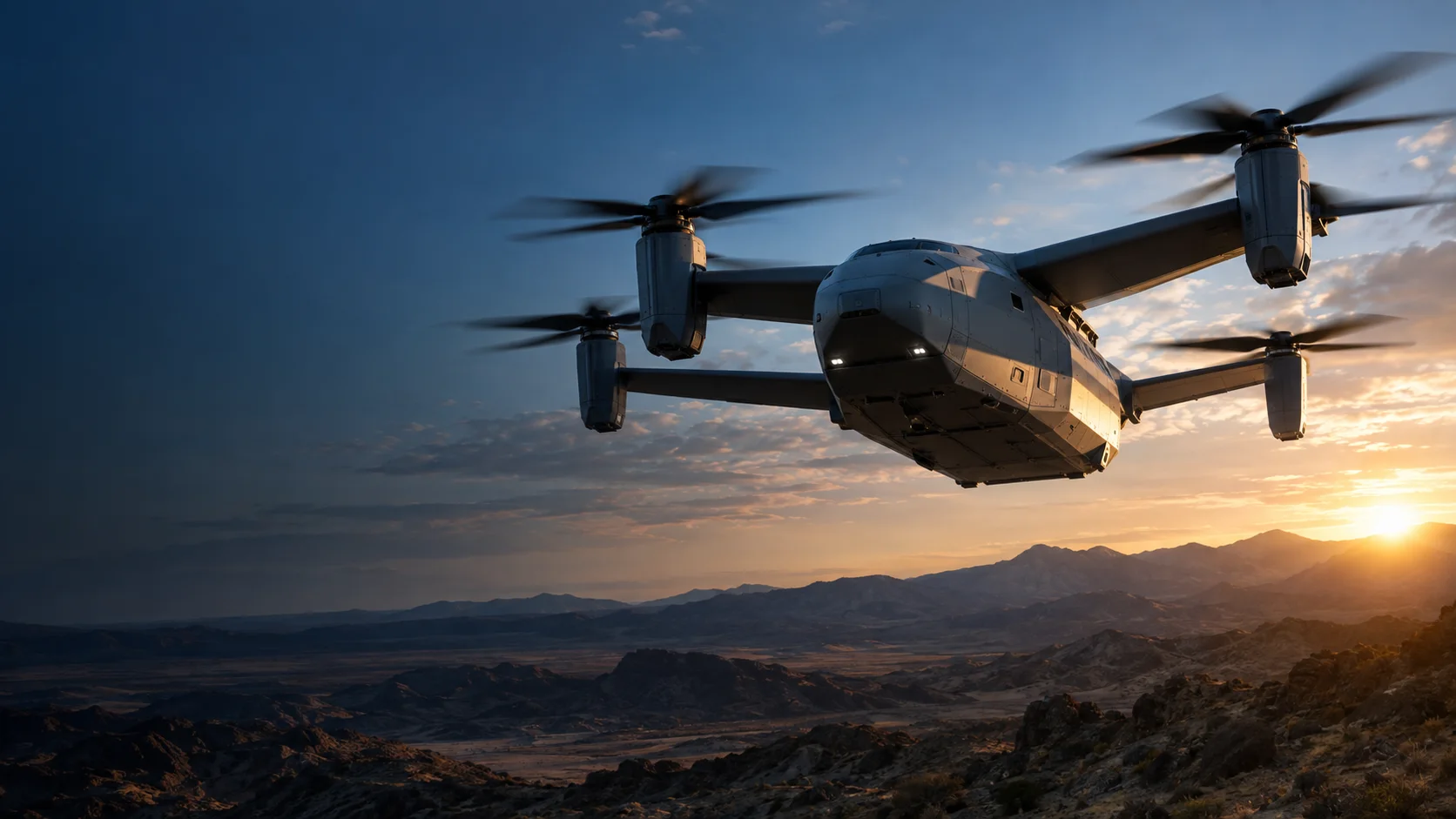
Compact, high-output electric propulsion for the next generation of unmanned aircraft. American engineering. Less mass. Less magnet material.
¹ HET-IR98 vs. M90C60 in Linear Labs’ engineering comparison. Adjusted mass estimate; not flight-qualified specifications. See comparison basis below.
The HET-IR98 is one example from the HET Drone Motor portfolio supporting Group 1–3 UAS. It illustrates our approach: give aircraft designers more useful output from less motor, with configurations matched to the aircraft and its mission.
Less propulsion mass can free up room in the aircraft weight budget for payload, battery capacity, or structural margin. A compact envelope gives integrators more freedom to package the propulsion system.
¹ Engineering comparison values, not continuous-duty ratings. Motor, controller, propeller, cooling, and mission duty cycle must be validated together.
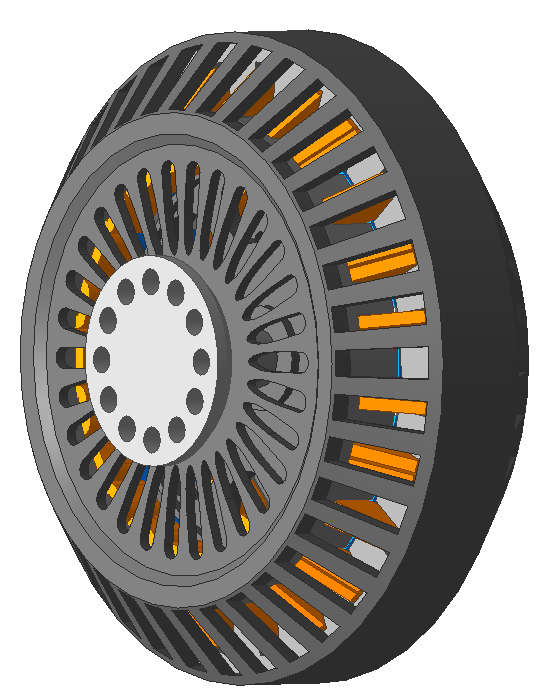
Start with motor-level evidence. Then prove the advantage across the complete propulsion system and the actual mission profile.
The comparison reports 51.4 kW for HET-IR98 versus 44.6 kW for M90C60 at the 100% throttle point. More output in a lower-mass package is the starting point for a stronger propulsion design.
The HET-IR98 model is 3.25 kg lighter and 29 mm shorter axially than the benchmark. That creates potential room for payload, energy storage, or tighter airframe integration.
0.93 kg of neodymium magnets versus 2.22 kg in the benchmark. A 58.1% reduction in magnet mass, with more reported output from less critical magnet material.
Propulsion is more than a motor. We start with your power, RPM, voltage, duty cycle, cooling, and weight targets to evaluate the right HET configuration and controller pairing.
| Metric | M90C60 | HET-IR98 | HET difference |
|---|---|---|---|
| Motor mass | 12.69 kg | 9.44 kg, adjusted | 25.6% lower |
| Diameter × length | 257 × 123 mm | 243 × 94 mm | 31.7% less envelope volume |
| Neodymium magnet mass | 2.22 kg | 0.93 kg | 58.1% lower |
| Output, 100% throttle | 44.60 kW | 51.40 kW | 15.2% higher |
| Torque, 100% throttle | 178.90 Nm | 206.00 Nm | 15.1% higher |
Basis: Linear Labs, “M90C60 vs HET-IR98 Technical & Performance Evaluation,” supplied updated report, pages 1–3. The report uses calculated component masses, including a 0.6× winding-mass adjustment for HET. Volume reduction is derived as 1 − (243² × 94)/(257² × 123), using cylindrical outer envelopes, not material volume. Figures are rounded.
These are model-specific engineering comparisons, not claims against every competing motor. No flight-time, payload, continuous-power, airworthiness, NDAA, or Blue UAS qualification is implied. Application-specific bench, thermal, and flight validation remain required. The confidential report is not available for public download.
The HET Drone Motor portfolio supports Group 1, Group 2, and Group 3 UAS, from compact unmanned aircraft to tactical VTOL and heavy-lift platforms. We match the motor configuration to your aircraft’s power, mass, speed, and integration requirements.
HET motor configurations for smaller platforms where low mass, compact packaging, and domestic sourcing matter.
HET motor configurations built around endurance, propulsion efficiency, compact packaging, and reliable integration.
HET motor configurations for higher-power aircraft where compact, high-output propulsion can create meaningful system-level value.
Motor selection and integration are application-specific. Performance figures shown on this page apply to the HET-IR98 benchmark configuration, not every motor configuration across Group 1–3.

Bring your next aircraft program closer to the team designing its motor. Work with Linear Labs on application fit, integration requirements, and the path from evaluation to production.
Domestic-content and procurement requirements are reviewed by program. U.S. manufacturing does not by itself establish NDAA or Blue UAS compliance.
PitchPro 2000: Complete pitch system replacement — without repowering.
The Challenge
The GE 1.5 fleet — the most widely deployed turbine in North America — is aging out. Pitch system failures are the #1 cause of unplanned downtime.
1GE Vernova 2024 Annual Report; AWEA fleet data. The GE 1.5 series is the most widely deployed turbine platform in North America.
2Padman, "Pitch System Reliability in Wind Turbines," North American Clean Energy, 2016; Windurance reliability studies.
3Industry estimates. Includes crane mobilization, replacement parts, labor, and lost production during downtime.
The Solution
A drop-in replacement that modernizes every component of the pitch system — motor, drive, PLC, and diagnostics — in a single installation.
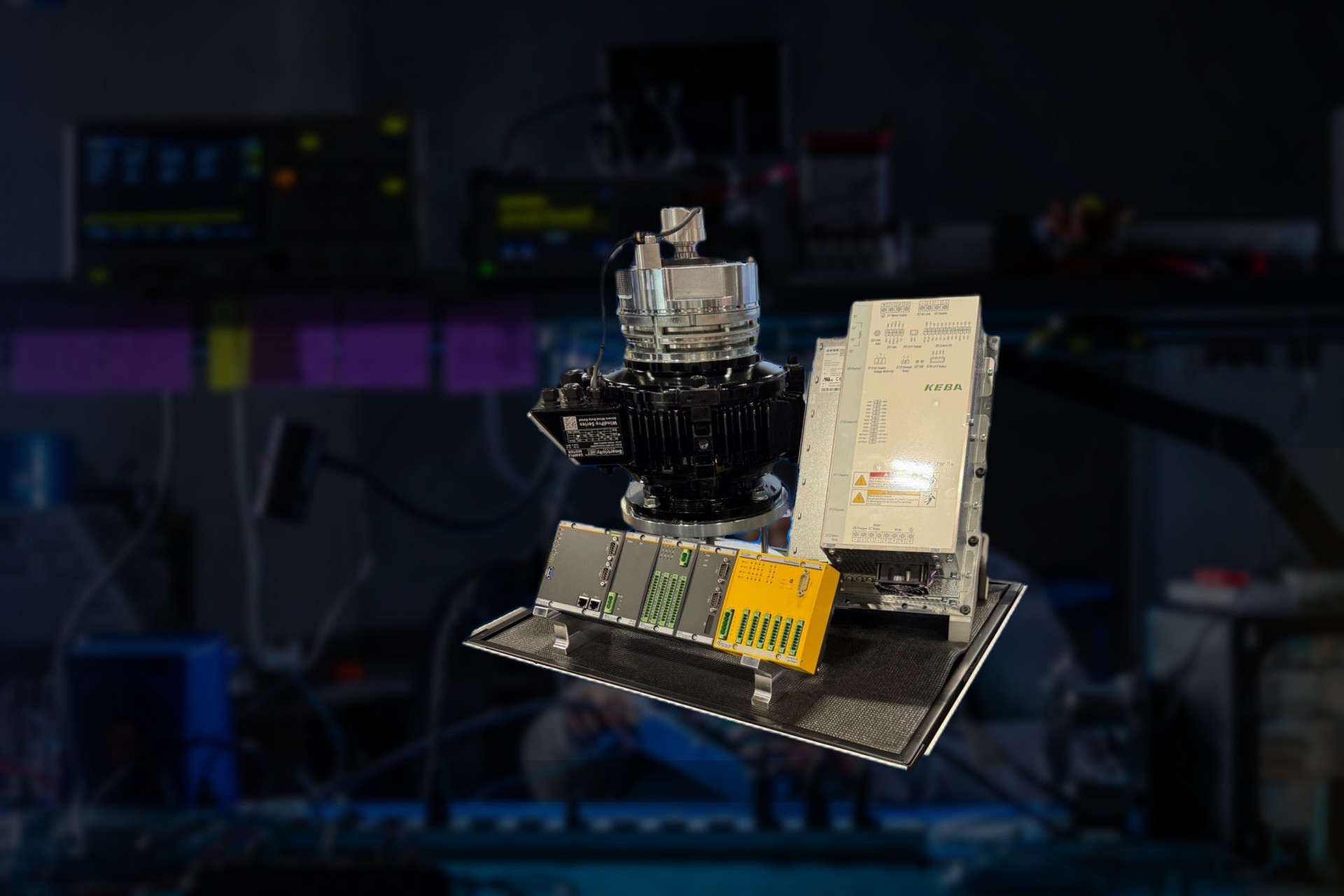
PitchPro 2000 — Complete Pitch System Assembly
Increased Uptime
Eliminate the #1 cause of unplanned downtime with modern, fault-tolerant components
Decreased O&M Costs
Reduce service calls and extend maintenance intervals with built-in diagnostics
Energy Efficiency Gains
97% motor efficiency captures more energy from every wind event
Optimized Project Returns
12–18 month payback extends turbine life without the cost of repowering
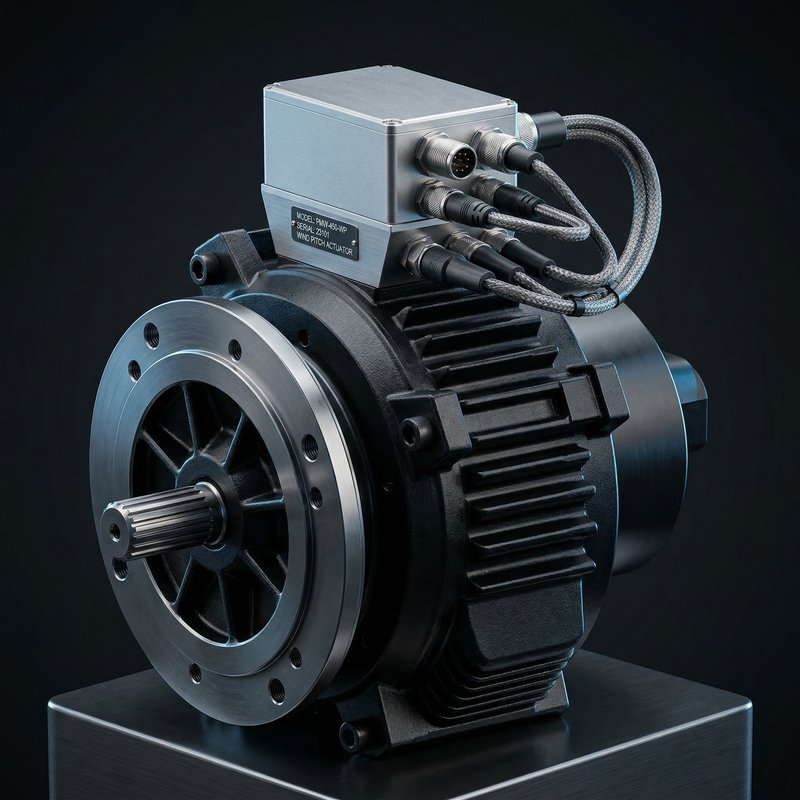
HET Pitch Motor
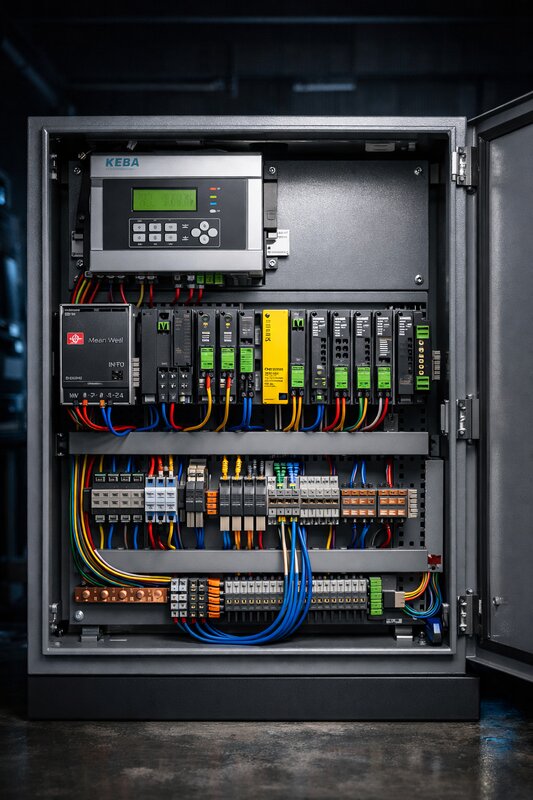
Integrated Control Panel
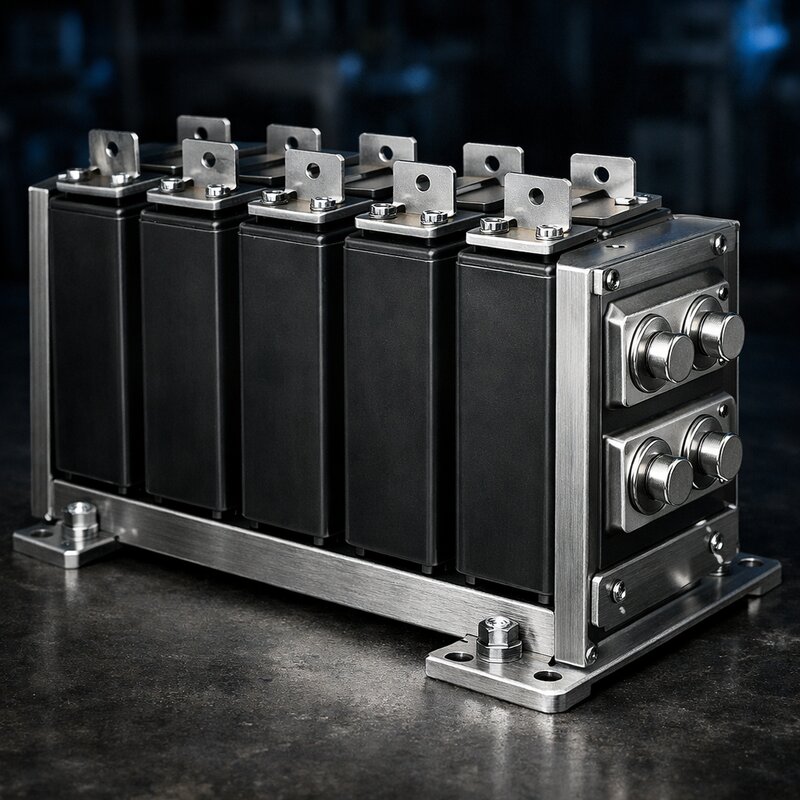
Ultracapacitor Bank
Engineered, assembled, and tested at our Fort Worth production facility.
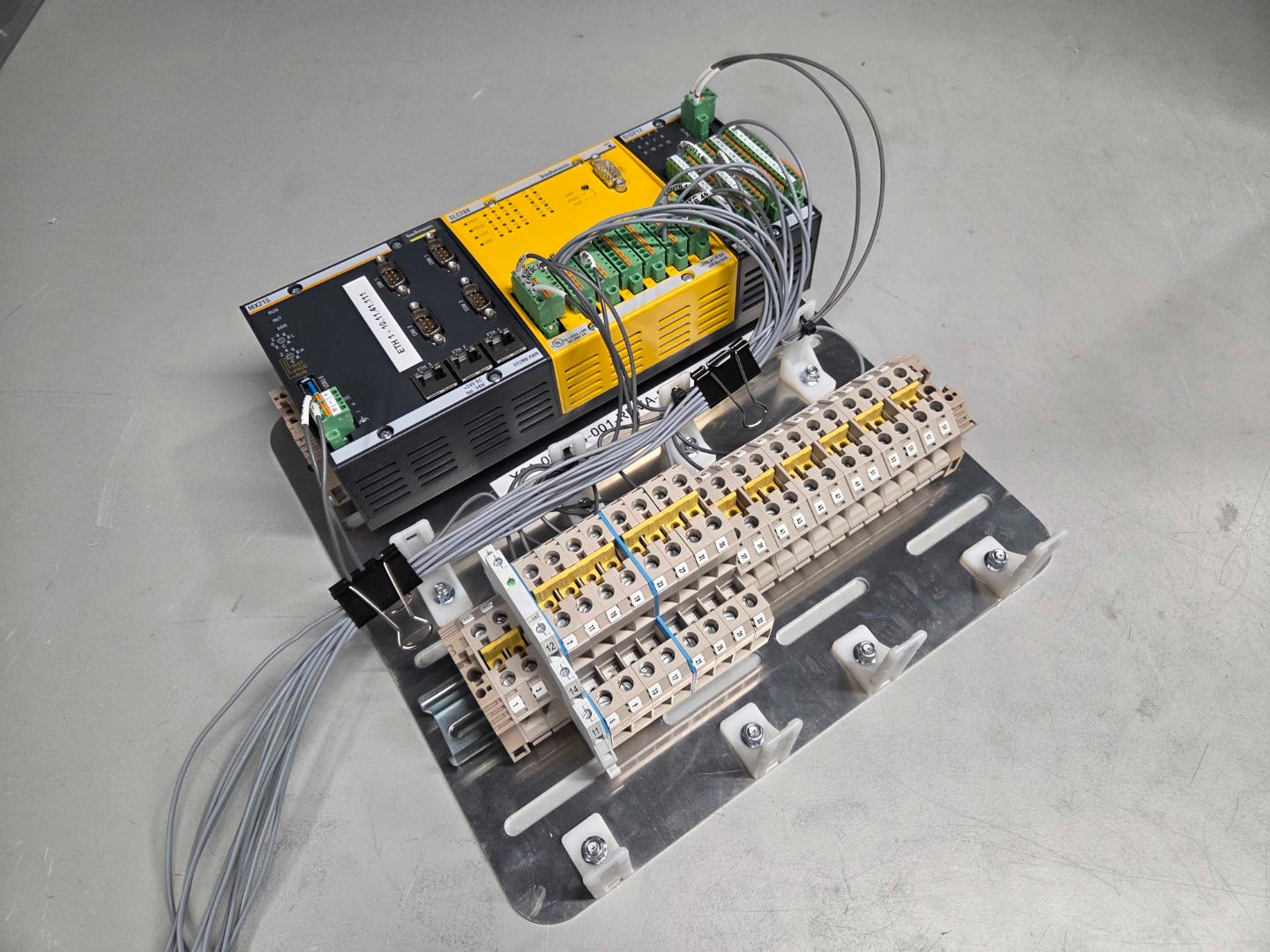
Bachmann + KEBA Control Stack
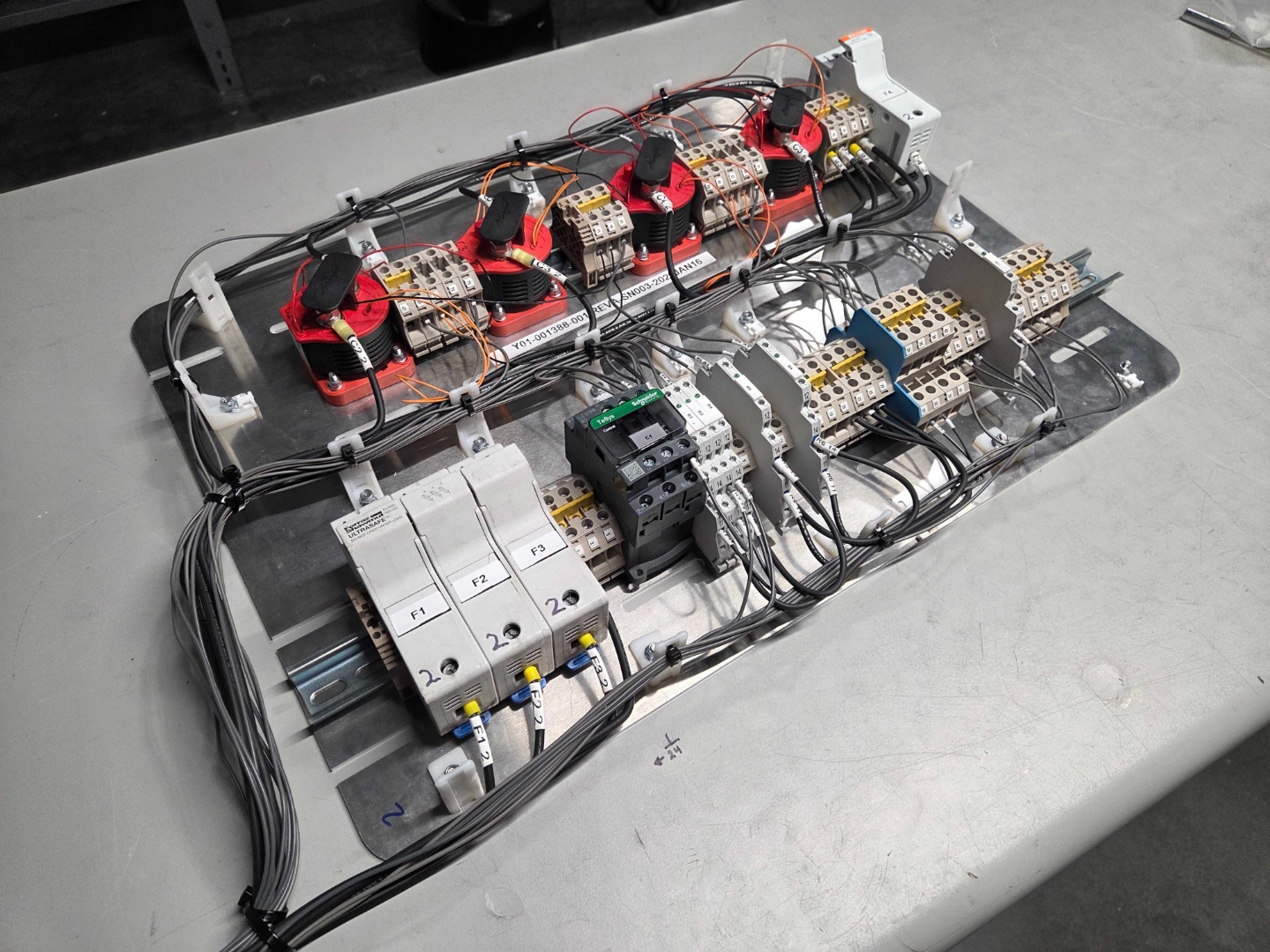
Power Distribution Panel
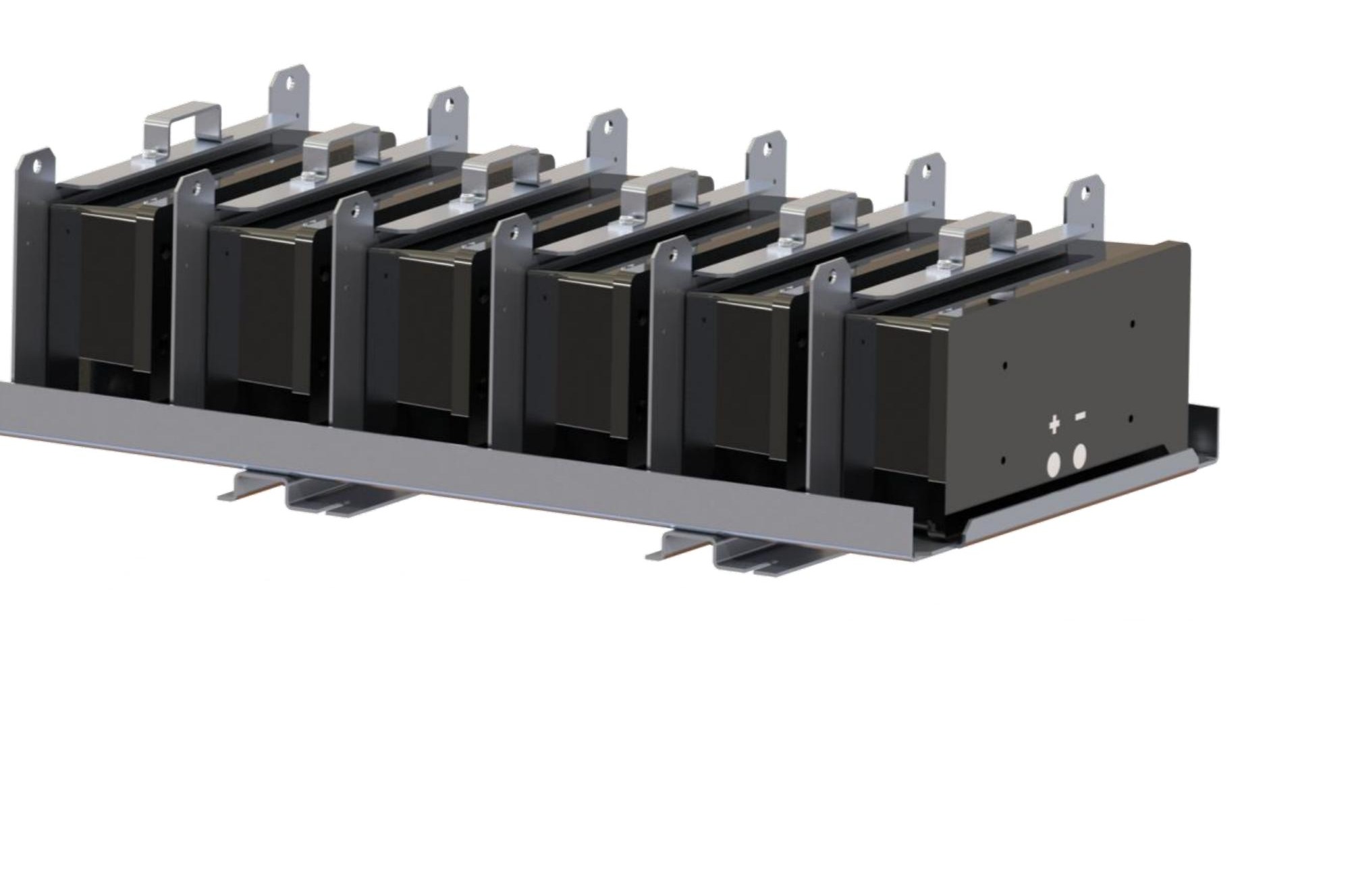
Energy Storage Rack
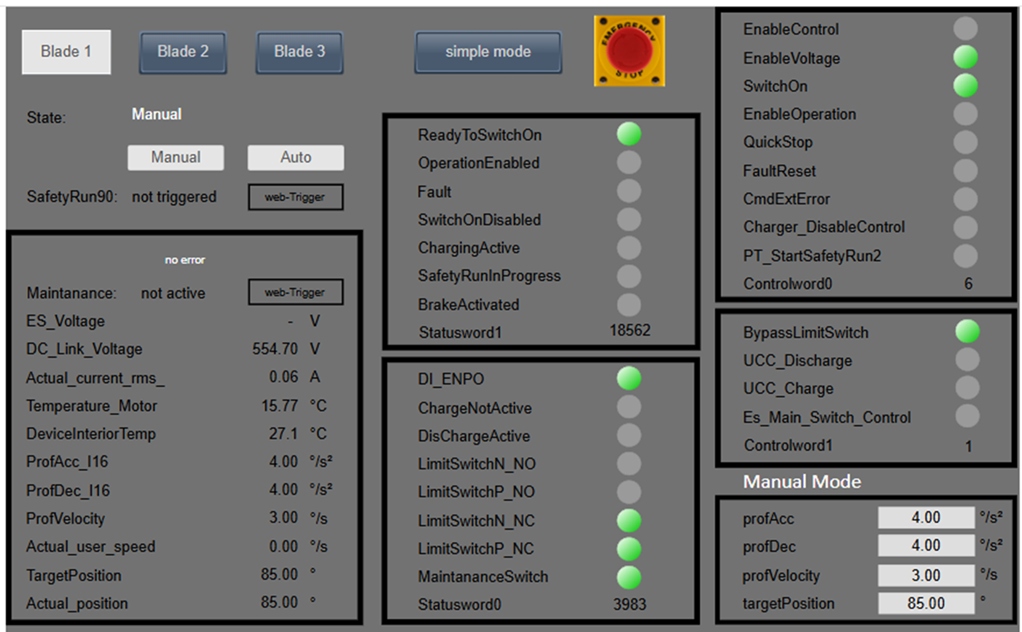
Technician Control Interface
Comparison
| Component | Legacy System | PitchPro 2000 |
|---|---|---|
| Motor | Brushed DC or legacy AC induction | HET permanent magnet (97% efficiency) |
| Weight | Standard industrial weight | 50% lighter — easier nacelle handling |
| Drive | Aging variable-frequency drive | Keba PitchMaster 2 with modern control |
| PLC | Legacy controller, limited diagnostics | Bachmann PLC with full SCADA integration |
| Diagnostics | Manual inspection, reactive maintenance | Real-time monitoring, predictive alerts |
| Installation | Component-by-component replacement | Modular drop-in panel, single installation |
Return on Investment
4Projected estimates based on Linear Labs fleet modeling. Actual results will vary by site conditions, turbine age, and operating environment.
Case Study
The PitchPro 2000 system was installed at Lamar Light & Power in Q1 2026, replacing the legacy electric pitch system on a GE 1.5 MW turbine. The drop-in retrofit was completed with zero structural modifications. Operational data confirmed the system's performance across a full range of wind conditions, validating efficiency, response time, and reliability targets.
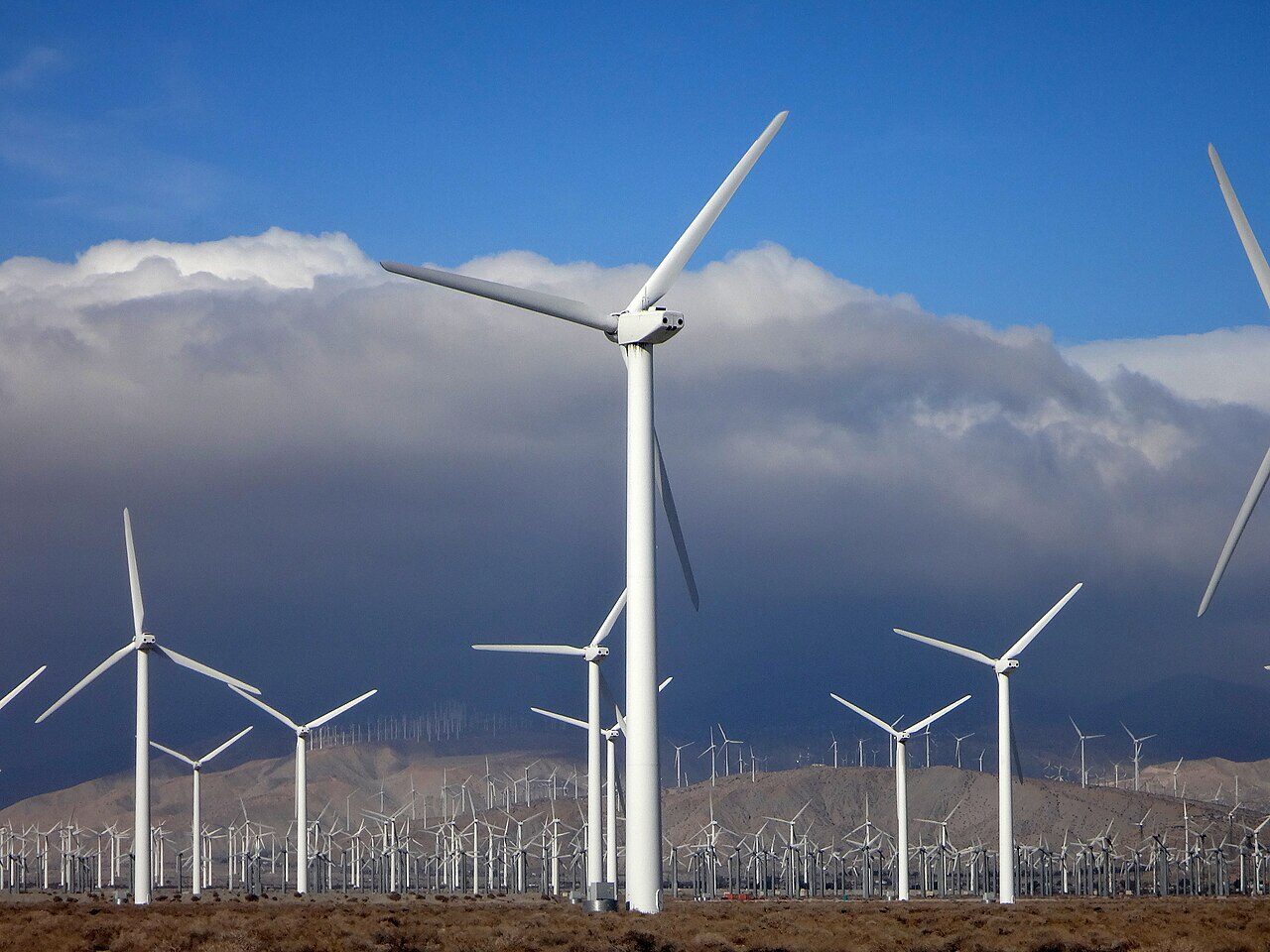
High-torque, high-efficiency motor systems engineered for the most demanding applications.
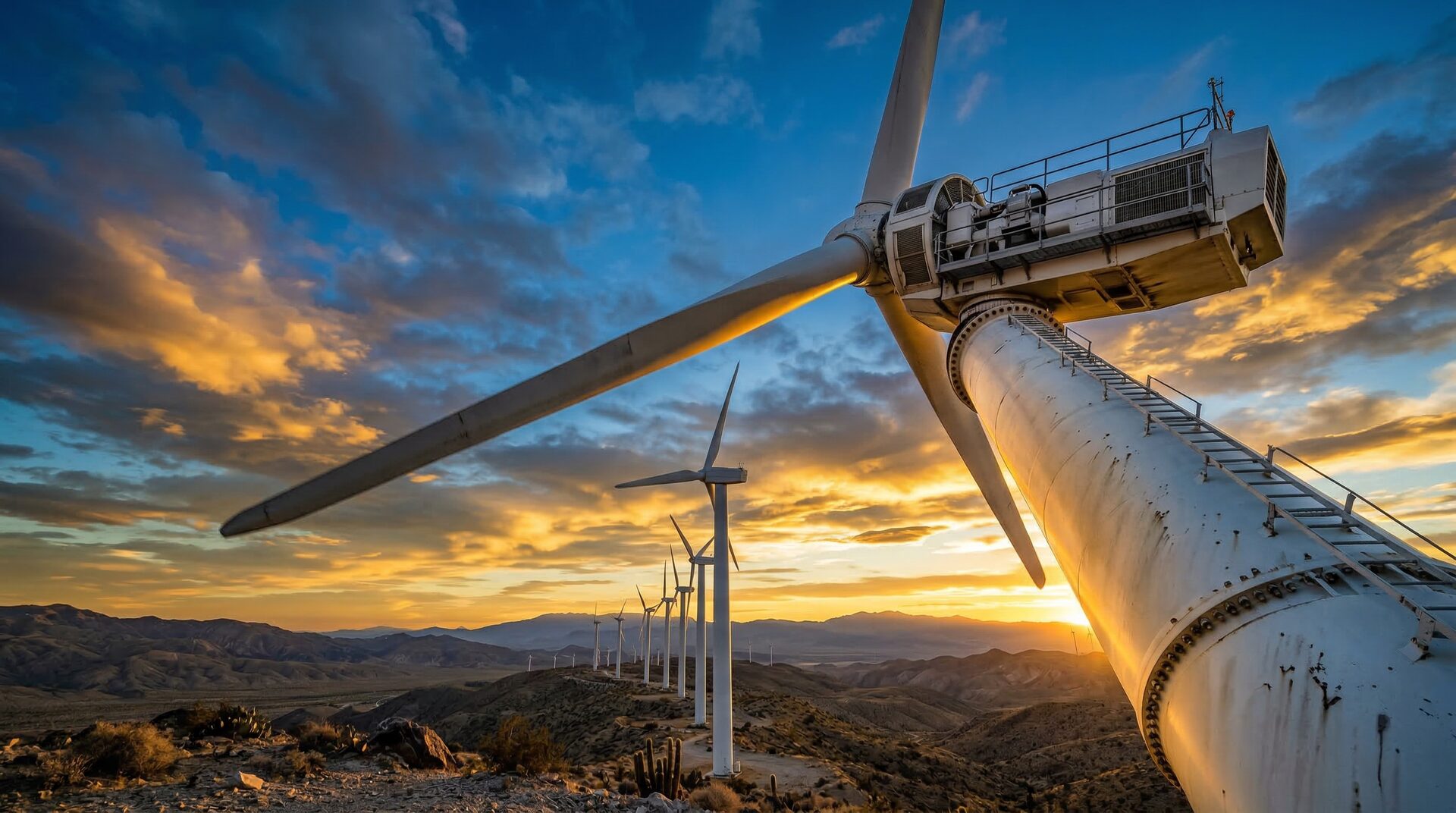
Energy
From pitch systems on aging wind fleets to downhole drilling motors and grid-scale energy storage, the HET architecture delivers the torque density and fault tolerance that energy applications demand. Our PitchPro 2000 is already modernizing the GE 1.5 fleet.
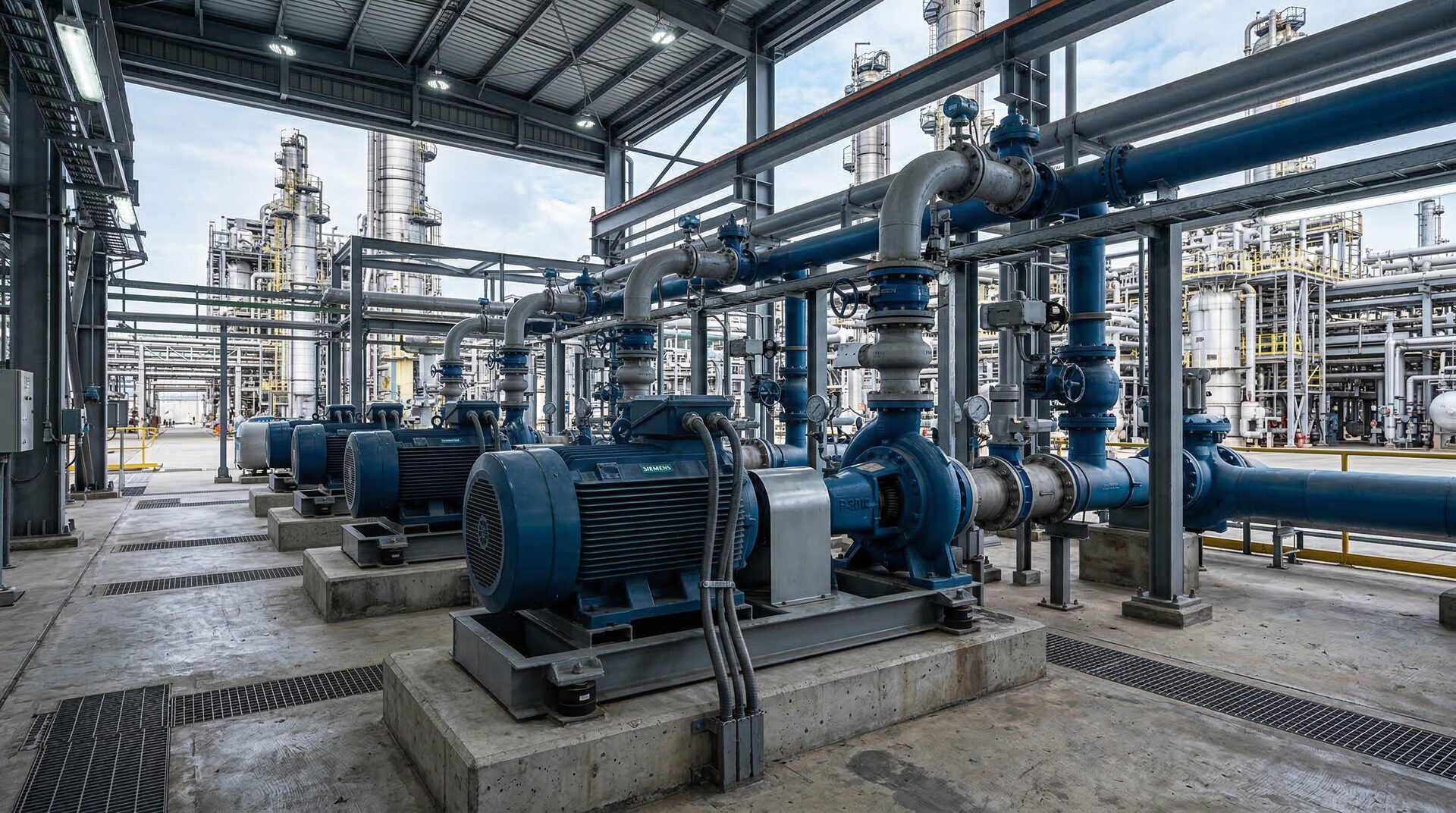
Industrial
Industrial motors drive 45% of global electricity consumption.1 The HET's 2× torque density means smaller, lighter motors that eliminate gearboxes in pump drives, linear actuators, and compressor systems — reducing both footprint and maintenance burden.
1IEA 4E & ABB, 2023. Electric motor systems account for over 45% of global electricity consumption.
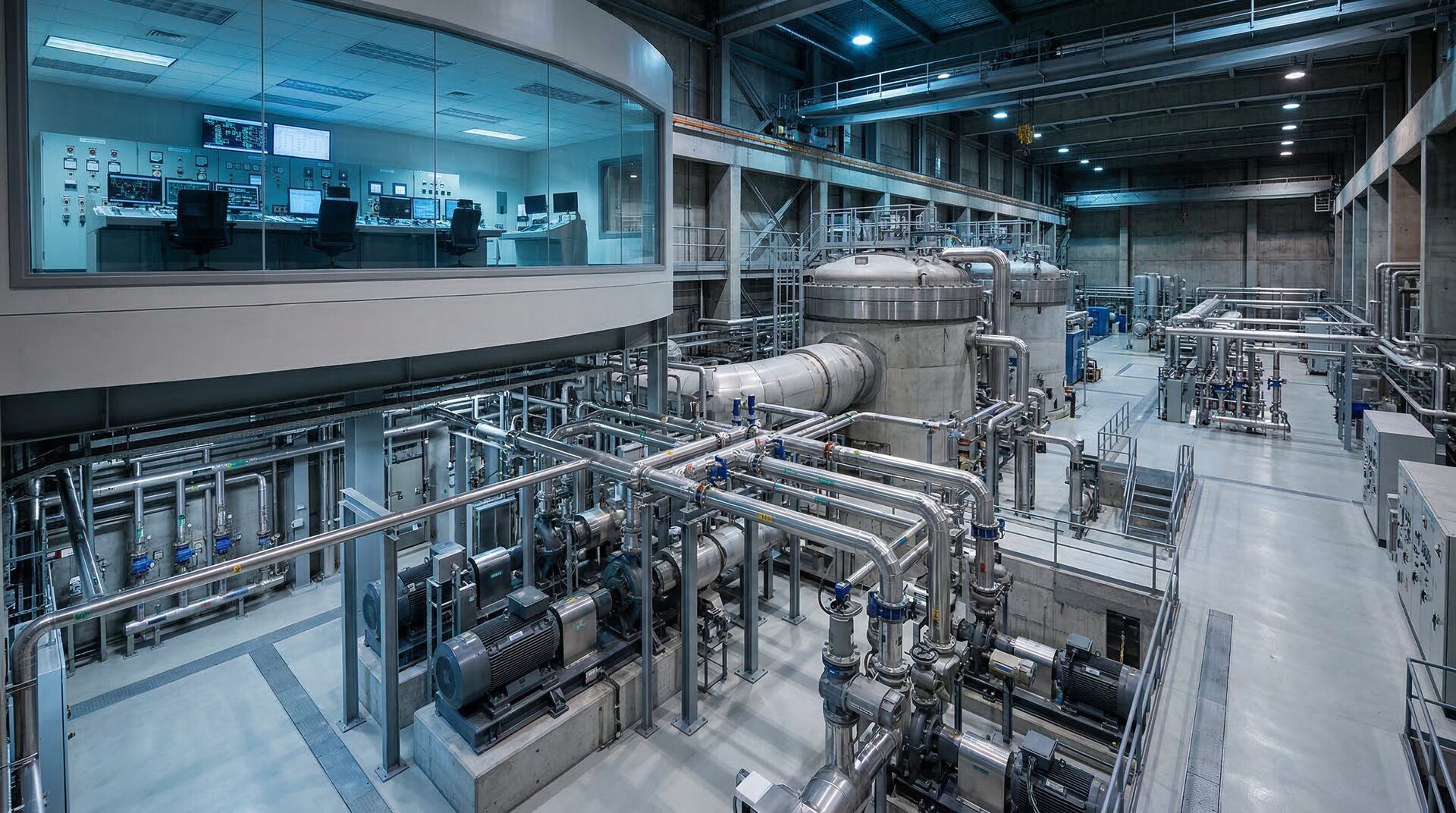
Nuclear
Our CTO has direct experience with 79 of 119 US nuclear plants. The HET's fault tolerance and multi-phase ride-through make it uniquely suited for safety-critical nuclear applications, from small modular reactor coolant pumps to containment system actuators.
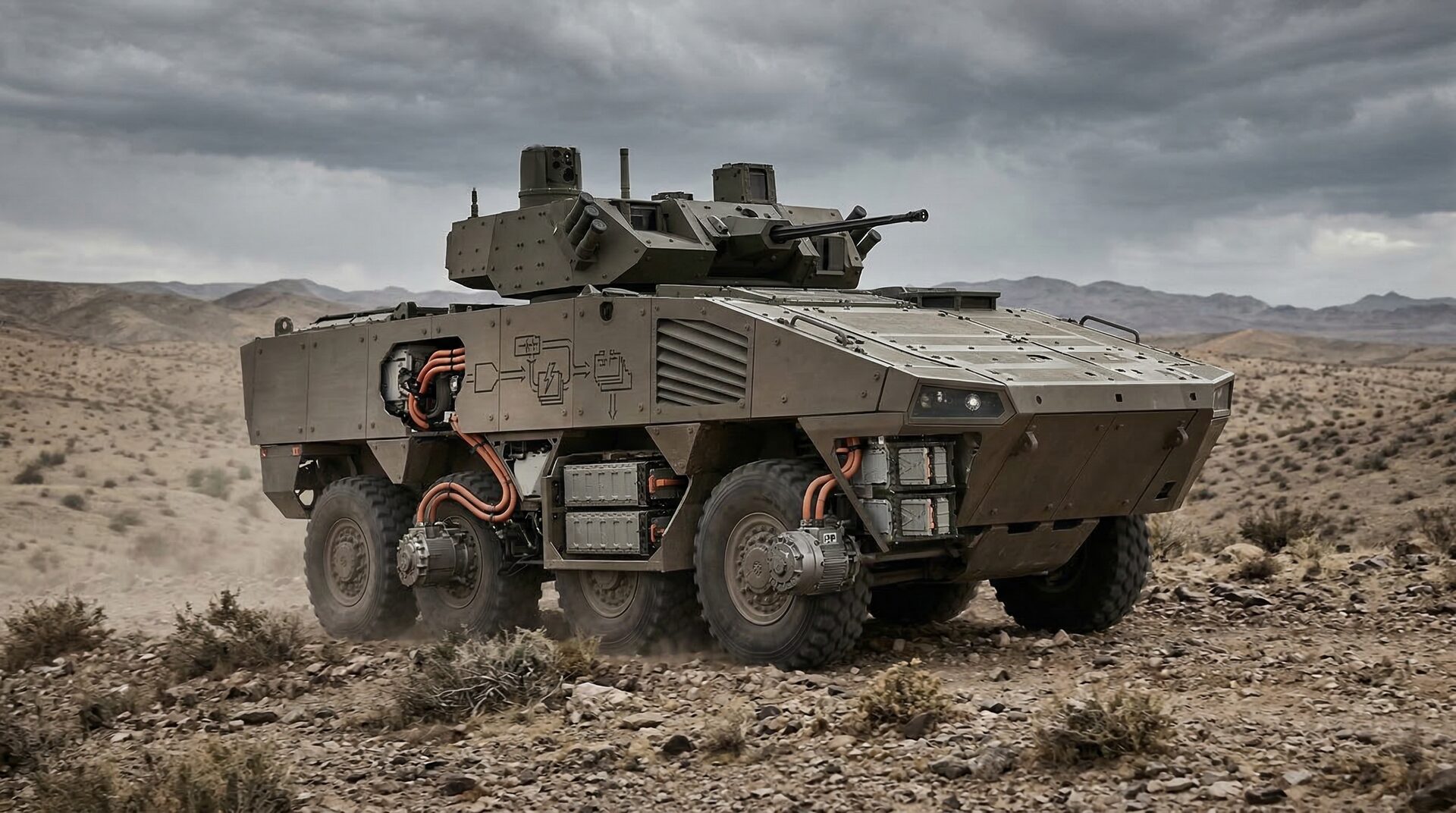
Defense
50% lighter motors mean reduced platform weight for military vehicles and naval propulsion. Built-in fault tolerance ensures mission continuity — the HET degrades gracefully rather than shutting down, a critical advantage in theater.

Mining
Mining demands maximum torque in minimum space. The HET's direct-drive capability eliminates the gearbox entirely — removing the most common failure point in conveyor drives and haul truck propulsion systems while reducing maintenance windows.
Fort Worth, Texas
Our Company
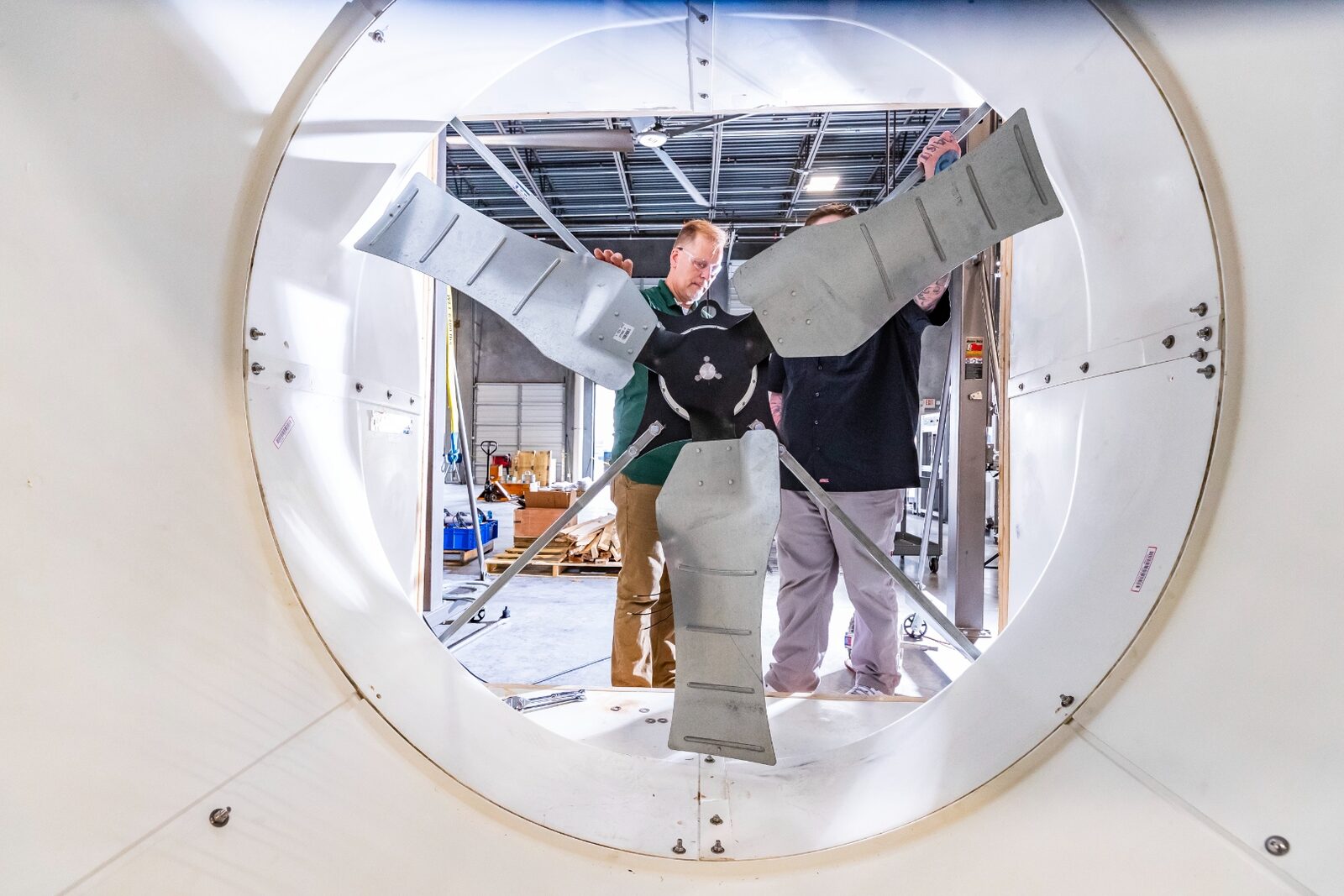
Linear Labs is an industrial motor technology company headquartered in Fort Worth, Texas. We design, build, and deploy patented high-torque motor systems for the world's hardest environments — from wind farms to nuclear facilities, military vehicles to mining operations.
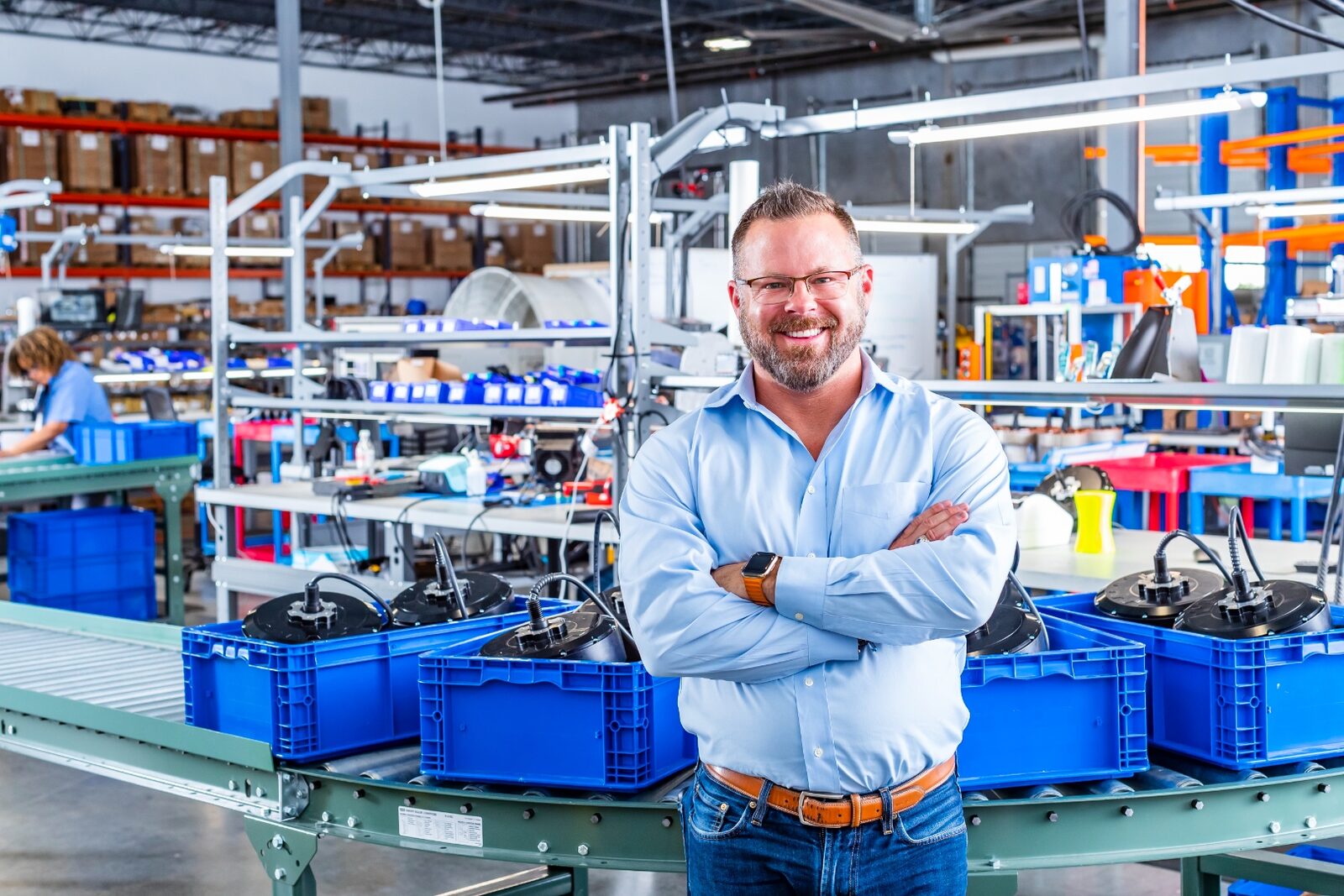
Leadership

CEO & Co-Founder
Founded Ustream (acquired by IBM for $150M). West Point graduate. MBA, Ohio State University. Brings enterprise scaling experience from building and exiting a global technology platform.
CTO & Co-Founder
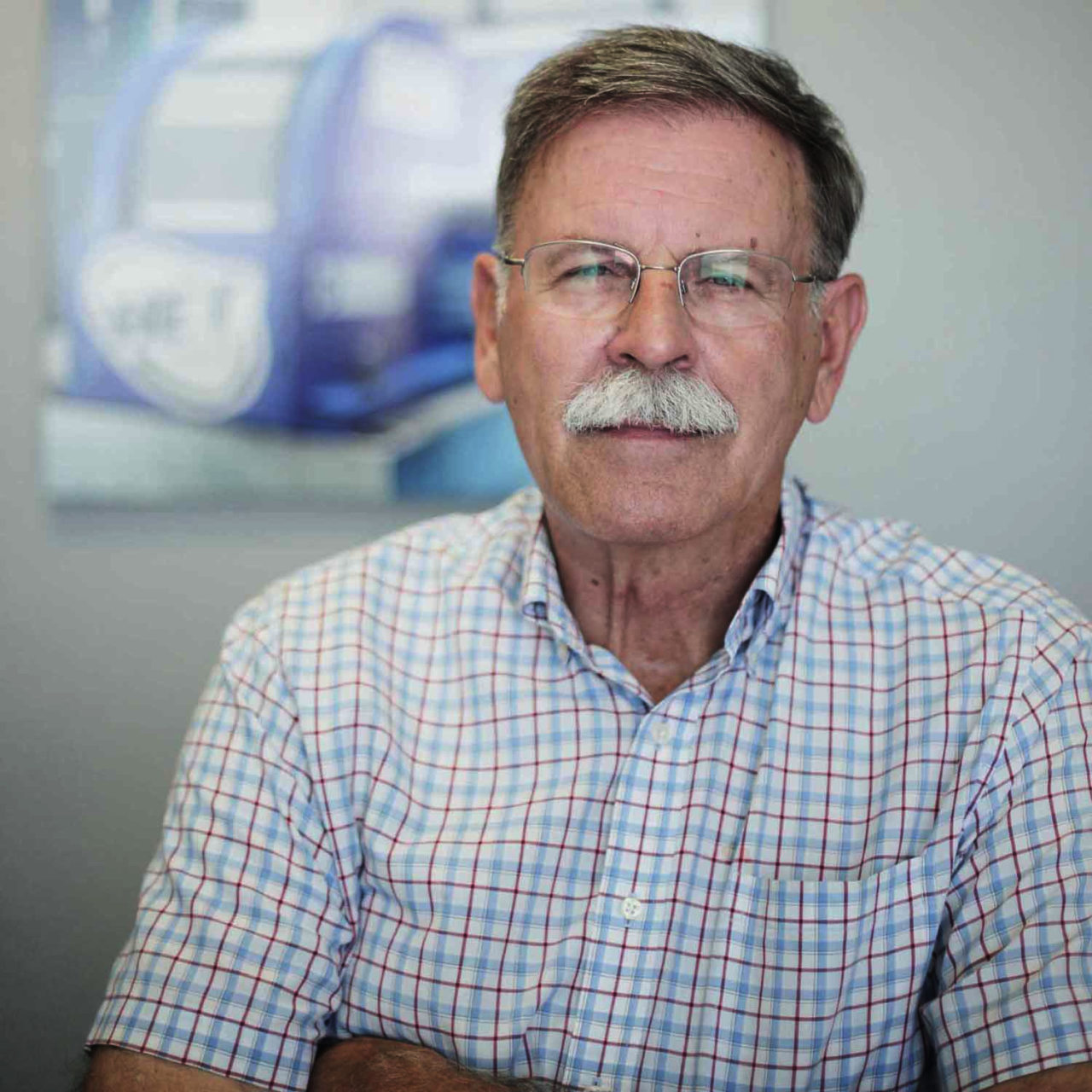
90+ patents. Former Director of Nuclear Programs at Raytheon/Walker Engineering with direct experience at 79 of 119 US nuclear plants. The inventor behind the HET architecture.
VP Engineering
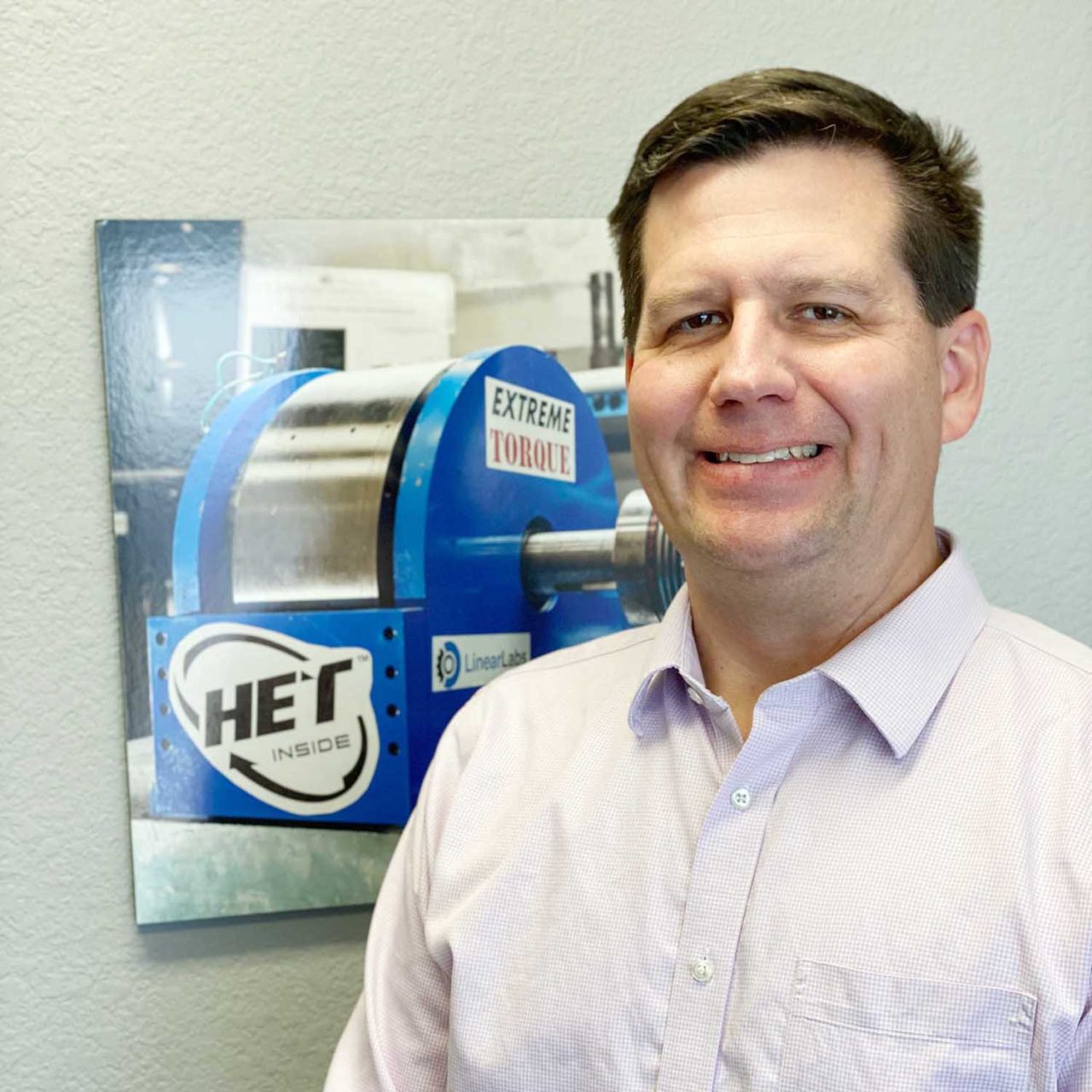
Former engineering roles at GM, Faraday Future, Saleen, Calnetix, and UQM Technologies. 13+ patents in electric motor and drivetrain design.

VP Manufacturing
Manufacturing leadership at Samsung Semiconductor, Apple, and Motorola. Expert in scaling precision electromechanical production from prototype to volume.
Get in Touch
Whether you have a specific technical requirement or want to explore a strategic partnership, we'd like to hear from you.
Linear Labs, Inc.
2600 NE Loop 820, Suite 100
Fort Worth, TX 76137
sales@linearlabsinc.com